






Mini Tummy Tuck

in Miami, FL

At Miami Aesthetic, the mini tummy tuck is a refined procedure designed for patients whose concerns live below the belly button. Performed by board-certified plastic surgeon Dr. Pat Pazmiño, this streamlined approach tightens the lower abdomen with a shorter incision and a faster recovery – revealing a flat silhouette.
Woman's toned abdomen and torso in black and white studio lighting
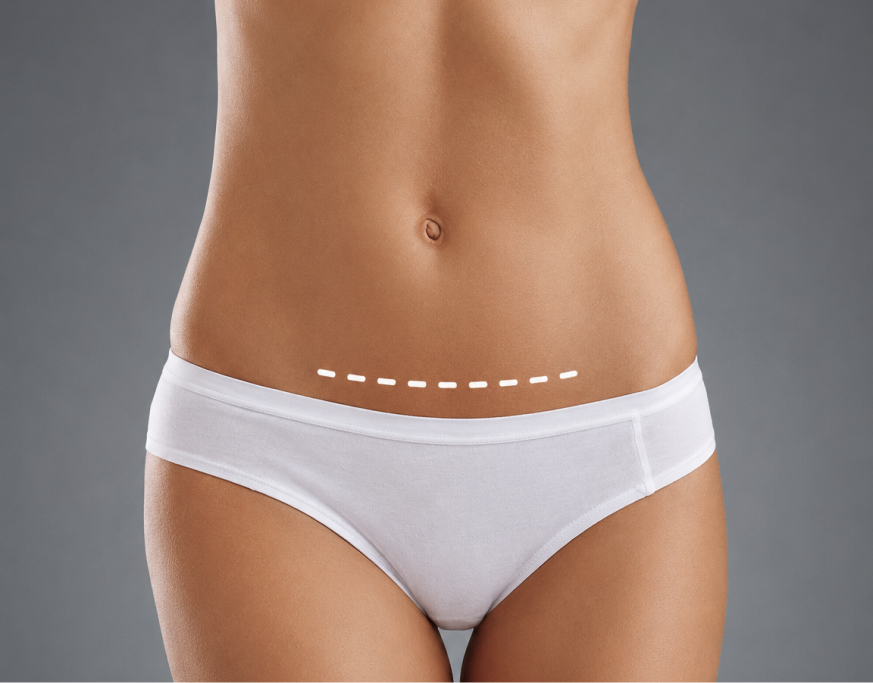
Abdomen with surgical marking indicating mini tummy tuck incision placement

What Is a Mini
Tummy Tuck?

A mini tummy tuck – also called a mini or partial abdominoplasty – removes excess skin and tightens loose muscle in the lower abdomen only, the area between the belly button and the pubic bone.
Unlike a traditional abdominoplasty, the mini version uses a shorter horizontal incision placed low along the bikini line and typically does not require repositioning the belly button. It’s the procedure of choice for patients at a healthy weight with a focused lower-belly concern: a small skin roll, a stubborn pooch, or laxity left behind after pregnancy or weight loss.

View Our
Before & After

How It Works

The mini tummy tuck addresses three distinct tissue layers in the lower abdomen:

Checkbox icon with orange outline and checkmark
Skin. A crescent of loose, stretched, or crepey skin below the navel is excised.
Checkbox icon with orange outline and checkmark
Muscle. If the lower rectus abdominis muscles have separated (diastasis recti), Dr. Pazmiño sutures them back into alignment, restoring internal core support.
Checkbox icon with orange outline and checkmark
Fat. VASER ultrasound-assisted liposuction may be used to remove stubborn fat and refine the transition between the abdomen, waist, and hips.
Because the upper abdomen is left largely undisturbed, tissue trauma is limited, drains are often unnecessary, and the recovery curve is meaningfully shorter than a full tummy tuck.
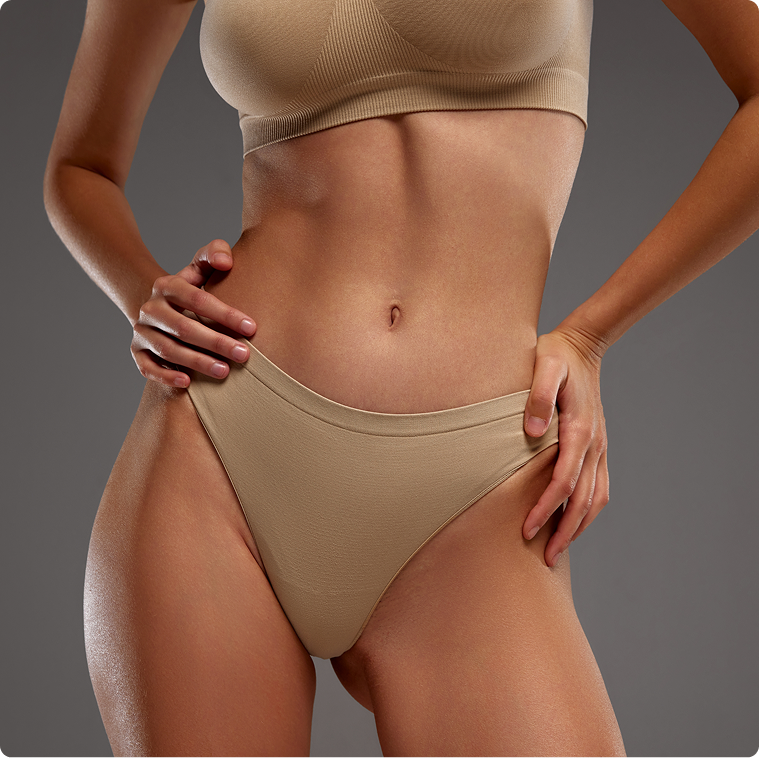
Model displaying toned abdominal results after mini tummy tuck procedure

Mini vs Full Tummy Tuck

Choosing between the two comes down to how much skin laxity you have and where it sits.

When a Mini Procedure Fits

  • Loose skin confined to below the belly button
  • Mild to moderate muscle separation in the lower abdomen
  • Minimal excess skin and muscle laxity overall
  • A shorter scar, usually 4–8 inches, hidden in the bikini line
  • Belly button typically left in its original position
  • Shorter surgery, shorter recovery

When a Full Abdominoplasty Is Better

  • Skin laxity above and below the navel
  • Significant diastasis recti spanning the full abdominal wall
  • Substantial post-pregnancy, multiple-pregnancy, or post-weight-loss redundancy
  • Larger fat deposits across the entire abdomen
  • A longer hip-to-hip incision plus repositioning of the belly button
Dr. Pazmiño will not recommend a mini procedure simply because you’d prefer a smaller scar. If your anatomy calls for a full tummy tuck, he’ll tell you – because an undersized operation produces an undersized result.

Preparing for Surgery

Preparation makes the difference between a smooth recovery and a complicated one.
  • Complete lab work and any medical clearances requested by our team
  • Stop nicotine in all forms – smoking dramatically impairs wound healing
  • Discontinue blood thinners, certain supplements, and anti-inflammatories as directed
  • Follow our clean soup and salad diet for the two days prior to surgery
  • Fill all prescriptions in advance and bring all of your medications with you
  • A responsible adult to drive you home and stay the first night
  • Loose, front-closing clothing and slip-on shoes
  • A recliner or a wedge of pillows to rest in a bent-at-the-hips position
  • Time off work – typically one to two weeks
  • Child care and pet care support for the first week
Your pre-operative packet includes your surgery date and complete instructions. Surgical quotes are sent by email after your consultation.
3D illustration of a woman's torso showing abdominal contours after mini tummy tuck treatment

The Mini Tummy Tuck Procedure: Step by Step

Mini tummy tuck can be performed under general or local anesthesia:

  • General anesthesia – most common, administered by a licensed anesthesia provider; keeps you completely asleep and comfortable and allows precise muscle repair.
  • IV sedation with local anesthesia – appropriate in limited cases; numbs the surgical area while you rest in a relaxed twilight state, with a quicker recovery from anesthesia.
Dr. Pazmiño makes a low, horizontal incision along the bikini line, sized to your anatomy and easily concealed. The skin of the lower abdomen is carefully lifted away from the underlying muscle.
If the lower rectus muscles have separated, they are sutured back together to tighten the abdominal wall from the inside out.
Excess skin and stubborn fat are trimmed, the remaining skin is redraped smoothly downward, and the incision is closed in layers with meticulous, tension-minimizing technique. The belly button is not typically altered or repositioned. A compression garment is placed before you wake up.Most mini tummy tucks take approximately 1-2 hours, depending on whether liposuction is combined.

Mini Tummy Tuck Recovery

Recovery from a mini abdominoplasty is real, but it is manageable – and considerably shorter than a full tummy tuck. Most patients are surprised by how quickly they feel like themselves again.
  • Tightness across the lower abdomen – a pulling sensation, especially when standing upright
  • Swelling and bruising, which peak around days three to five
  • Soreness managed with prescribed pain medication
  • Walking bent slightly at the waist for the first few days, with gentle walking encouraged to promote circulation
  • A compression garment worn continuously to control swelling and support healing tissues
Important: do not consume alcohol while taking post-surgical medications.
  • Days 1–7: Rest is paramount; you may need assistance with daily tasks. Walk short distances hourly and keep the garment on. Discomfort is highest during this window and improves daily.
  • Weeks 2–3: Most patients return to desk work and light daily activity. You’ll stand fully upright and drive again once off narcotic pain medication. Swelling and bruising begin to subside.
  • Weeks 4–6: Light cardio resumes with clearance; avoid heavy lifting and intense exercise. The abdomen begins to look noticeably flatter.
  • Weeks 6–8: Most patients are cleared to return to all regular activities, including exercise.
  • Months 3–12: Residual swelling resolves, the contour settles into its final shape, and the scar gradually fades from pink to a thin, pale line.
  • Wear your compression garment exactly as directed
  • Take all prescribed medications, including pain relievers and antibiotics, as directed
  • Keep incisions clean and dry; follow wound care and dressing instructions precisely
  • Sleep in a slightly flexed position to reduce tension on the closure
  • Avoid lifting more than 10 pounds for the first four weeks, and avoid bending or twisting that strains the abdomen
  • No strenuous exercise, swimming, or hot tubs until cleared
  • Hydrate well and eat a protein-forward, balanced diet to support healing
  • Attend every follow-up appointment so Dr. Pazmiño can monitor your progress
  • Protect your scar from sun exposure and begin scar therapy when instructed
    Questions during recovery? Call or text (305) 576-3443. After-hours messages are answered the next business day.
Woman displaying toned abdominal area after mini tummy tuck recovery

Expected Results

You’ll notice a smoother lower abdomen almost immediately, though swelling will mask the full outcome for weeks. By three months, roughly 70–80% of your result is visible. The final contour – smooth, tight, and naturally proportioned – typically emerges between six and twelve months as tissues fully settle and the scar matures into a thin line concealed by underwear or swimwear..
Results are long-lasting: skin and muscle that have been surgically tightened do not simply return to their pre-operative state. Clothes fit better, and overall body proportions appear more balanced.
Woman in fitness wear displaying toned abdominal area after mini tummy tuck procedure

Maintaining Your
Results

Checkbox icon with orange outline and checkmark

Hold a stable weight. Significant fluctuations can stretch skin and undo muscle repair.

Checkbox icon with orange outline and checkmark
Stay consistent with core work and regular exercise once you're fully cleared.
Checkbox icon with orange outline and checkmark
Prioritize protein and hydration to support skin quality and elasticity.
Checkbox icon with orange outline and checkmark
Consider family planning. Future pregnancy can reverse abdominal tightening.
Checkbox icon with orange outline and checkmark
Care for your scar with sun protection and topical therapy long-term.
Checkbox icon with orange outline and checkmark
Listen to your bodyand avoid activities that strain the abdominal muscles.

Who Is a Candidate for a Mini Tummy Tuck?

You may be an excellent candidate for a mini tummy tuck if you:
Checkbox icon with orange outline and checkmark
Are bothered primarily by loose skin, stubborn fat, or a bulge below the navel
Checkbox icon with orange outline and checkmark
Are at or near a stable, healthy weight and have maintained it for at least 6 months
Checkbox icon with orange outline and checkmark
Have mild lower-abdominal muscle separation, often afterpregnancy or C-section
Checkbox icon with orange outline and checkmark
Are a non-smoker or willing to stop well in advance of surgery
Checkbox icon with orange outline and checkmark
Are in good general physical and mental health without uncontrolled medical conditions that could impair healing
Checkbox icon with orange outline and checkmark
Have realistic expectations about scarring and outcomes
Checkbox icon with orange outline and checkmark
Are finished having children, or are comfortable that future pregnancy may alter results
Patients with skin laxity extending above the belly button, significant excess weight, or a large diastasis are usually better served by a full tummy tuck.
Woman displaying a toned, defined abdominal contour after a mini tummy tuck procedure

Benefits of a
Mini Tummy Tuck

Checkbox icon with orange outline and checkmark
A flatter lower belly that finally matches the effort you put into the gym, eliminating the persistent pooch or bulge.
Checkbox icon with orange outline and checkmark
Firmer skin and muscle with improved core definition when separated muscles are repaired, and internal support is restored.
Checkbox icon with orange outline and checkmark
Clothes that fit the way they should – jeans, swimwear, and fitted dresses without the pooch.
Checkbox icon with orange outline and checkmark
Less invasive than a full abdominoplasty – smaller incision, less extensive recovery, and less scarring.
Checkbox icon with orange outline and checkmark
Long-lasting results with a stable weight and consistent healthy habits.
Checkbox icon with orange outline and checkmark
Renewed confidence – the quiet, everyday kind that shows up in how you carry yourself.

Risks and Considerations

Every surgical procedure carries risk. For mini abdominoplasty, potential complications include:
Checkbox icon with orange outline and checkmark

Bleeding, infection, and adverse reactions to anesthesia or
medication

Checkbox icon with orange outline and checkmark
Seroma (fluid accumulation) or hematoma formation
Checkbox icon with orange outline and checkmark
Delayed or poor wound healing
Checkbox icon with orange outline and checkmark
Numbness or changes in skin sensation
Checkbox icon with orange outline and checkmark
Asymmetry or unfavorable scarring
Checkbox icon with orange outline and checkmark
Prolonged swelling and bruising, which can persist for weeks to
months
Checkbox icon with orange outline and checkmark
Rarely, unsatisfactory cosmetic results requiring revision surgery

These risks are meaningfully reduced when surgery is performed by a board-certified plastic surgeon, such as Dr. Pazmiño, in an appropriately equipped, accredited facility with a strict safety protocol. Incisions are strategically placed and closed with meticulous technique to minimize scarring. Dr. Pazmiño will review your individual risk profile candidly during your consultation.

Mini Tummy Tuck Cost in Miami, FL

Mini tummy tuck pricing at Miami Aesthetic generally ranges from $9,500 to $18,500. Because every abdomen – and every surgical plan – is different, pricing is only confirmed after an in-office visit or Zoom i-Consult, followed by a personalized quote by email.
Factors Affecting Cost
Financing: CareCredit and Alphaeon Credit are available to help make your procedure more accessible.
Miami Brickell skyline with high-rise buildings and palm trees along the waterfront

Why Patients Choose Miami Aesthetic
for Mini Tummy Tucks?

Checkbox icon with orange outline and checkmark
Innovation Backed by Credentials
Dr. Pat Pazmiño is a board-certified plastic surgeon and the inventor of the UltraBBL™ – an ultrasound-guided technique that raised the safety standard so significantly it is now required of every surgeon performing a BBL in the state of Florida.
Checkbox icon with orange outline and checkmark
A Leader in Patient Safety
Safety is paramount at Miami Aesthetic. Dr. Pazmiño is recognized as a leader in patient safety, employing rigorous protocols and advanced techniques to minimize risk in a secure surgical environment.
Checkbox icon with orange outline and checkmark
Ultrasound-Guided Precision
Miami Aesthetic operates with advanced technology including VASER lipo, Morpheus8, and Renuvion, allowing Dr. Pazmiño to sculpt with a level of accuracy that protects surrounding tissue while refining contour.
Checkbox icon with orange outline and checkmark
Plans Built for One Person Your surgical plan is designed around your anatomy, your history, and your goals – and visualized together during your consultation using on-screen photo morphing so you know what to expect before you commit.

Frequently Asked Questions (FAQs)

Frequently Asked Questions (FAQs)

Liposuction removes fat but does not remove loose skin or repair separated muscle. A mini tummy tuck does all three. Many patients benefit from combining the two.
Usually not. Leaving the navel in place is one of the defining features of the mini procedure and part of why recovery is shorter.
Typically 4–8 inches, placed low along the bikini line so it’s concealed by underwear and most swimwear. Length depends on how much skin is removed.
It can remove stretch marks located on the skin excised from the lower abdomen, but it will not address stretch marks on the upper abdomen or flanks.
Light walking usually begins within a few days. Strenuous exercise, heavy lifting, and abdominal workouts should be avoided for at least 6–8 weeks, or until cleared by Dr. Pazmiño.
Often not – because the upper abdomen is left largely undisturbed, drains are frequently unnecessary. Dr. Pazmiño will advise you if a drain is needed for your specific procedure.
Often, yes. The overhang above a C-section scar is a very common reason patients pursue this procedure, and existing scars can frequently be incorporated into the new incision.
Absolutely. Mini tummy tucks pair well with VASER liposuction of other areas, Rib Contouring, breast procedures, and the UltraBBL™ as part of a comprehensive Mommy Makeover.
Results are long-lasting with a stable weight and healthy lifestyle. Significant weight fluctuations or future pregnancies can compromise the outcome.

Ready to See What's Possible?

Your consultation with Dr. Pazmiño is where speculation ends, and a real plan begins – complete with on-screen visualization of your potential result.